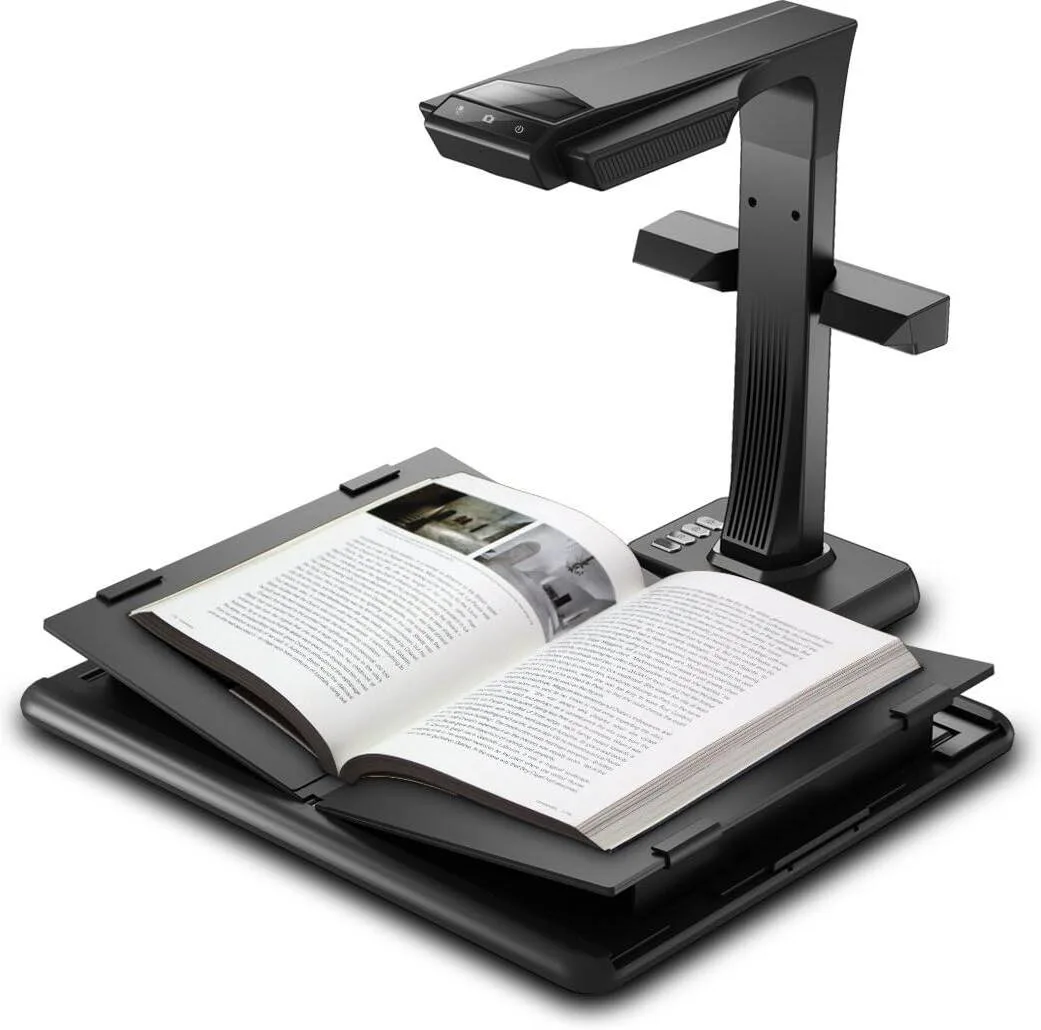
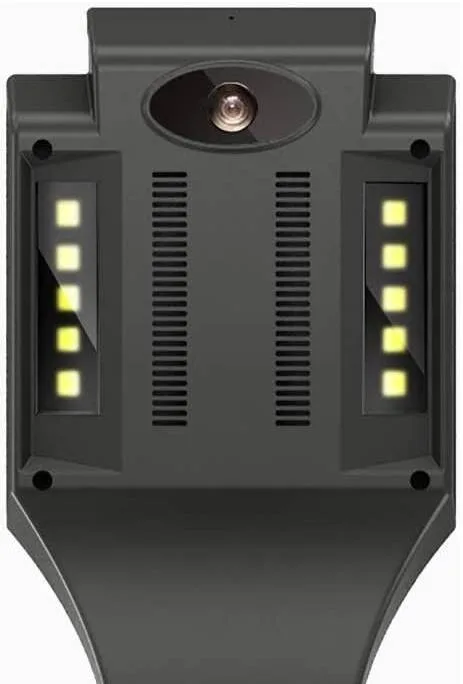
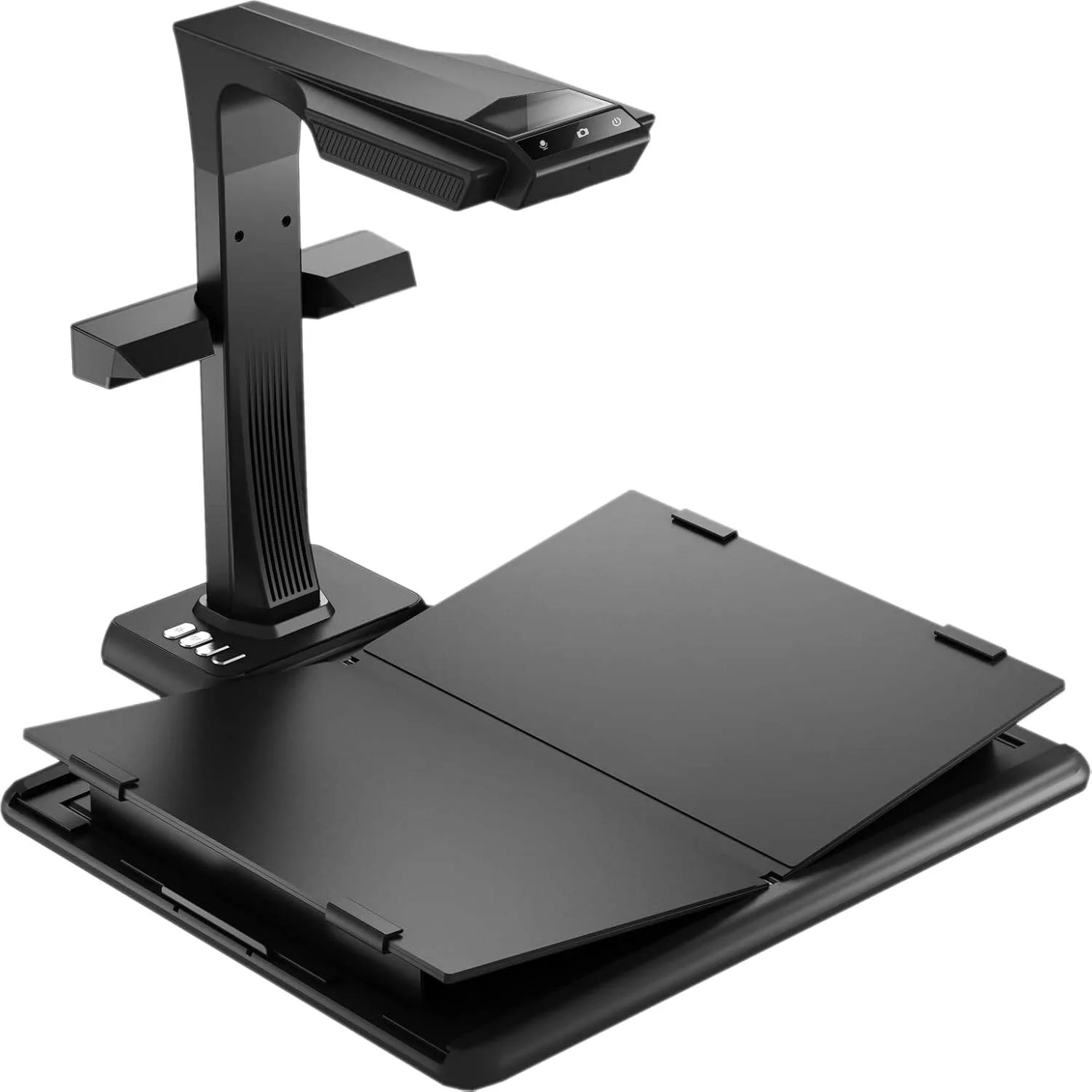
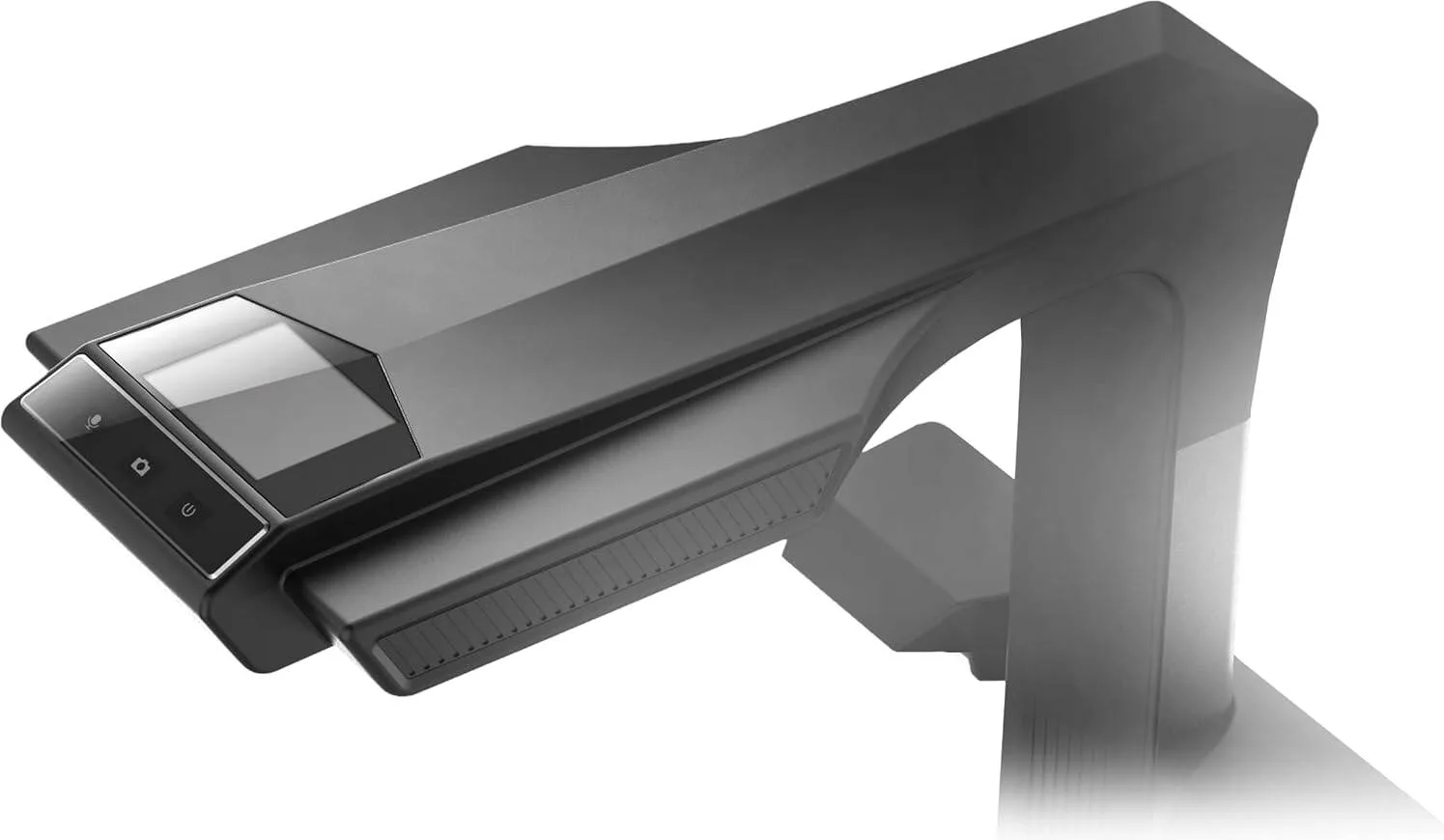
CZUR M3000 PRO V3 Document Scanner, CMOS Scanner, 48m Pixel, 7936 x 5952 Resolution, 470 DPI, 3 Laser Rays, Auto Enhance, Color, Patterns, Stamps, Gray Scale, B&W Modes
- CMOS Sensor
- 48M Pixel
- 7936 x 5952 Resolution
- 470 DPI
- Flat single page ≈ 1.5s/page
Warranty: 1 Year — effortless warranty claims with UK-wide coverage. Learn more
Details
- Shipping Weight
- 13.35 Kg
- Shipping Dimensions
- 60.50 cm x 58.00 cm x 28.00 cm
- Purpose
- Library, Archives Service Center, etc.
- Product Type
- Professional book scanner
- Scanning Materials
- Documents, Books, Magazines, Files, Scrolls, Forms, Invoices, Certificates, Business Cards, Sculptures
- Sensor
- CMOS
- Pixel
- 48 M
- Resolution
- 7936×5952
- DPI (Default)
- 470
- Format
- Flat single page ≤A3, Books ≤A4
- Speed
- Flat single page ≈1.5s/page
- Pre Scan
- 0 s
- Image Format
- JPG
- Color Bit Depth
- 24 bits
- Export Format
- JPG, PDF, Searchable PDF, Word, Excel, TIFF, PNG, BMP
- Video Streaming Format
- MJPG
- Preview
- 1920×1080@30Fps (Visual presenter), 1536×1152@20Fps (Scanning)
- USB
- USB 2.0 High-Speed
- Light Source
- Natural light & LED lights
- Top LED Lights
- Yes
- Side Lights
- Yes
- Focus Mode
- Fixed focus
- Scanning Access
- Device Control, Software triggering, Hand button, Foot pedal
- System Support
- Windows XP/7/8/10/11 (32/64-bit), macOS 10.13+
- Processor
- Dual-core openrisc 32-bit
- Laser-Assisted
- 3 laser rays
- DDR
- 1G bit
- Image Cache
- Hi-Speed DDR
- HDMI Type
- HDMI 1.4
- LCD
- 2.4", 4:3, 320×240
- MIC
- Yes
- Buzzer
- Yes
- Hand Button
- Yes
- Foot Pedal
- Yes
- Hard Document Base
- Yes
- Book Rest
- Yes
- Book Cover Block
- Yes
- Power
- Input: 100-240V, 50/60Hz; Output: 9V/1.5A
- OCR
- Yes
- OCR Languages
- Supports 180+ languages
- USB-PC Visual Presenter
- Yes, 1920×1080@20Fps
- HDMI Visual Presenter
- Yes, up to 3840×2160P@30Hz
- Flattening Curve
- Yes
- Smart Paging
- Yes
- Smart Tilt Corrections & Auto-Cropping
- Yes
- Professional Trimming
- Yes
- Background Purifying
- Yes
- Finger Removal
- Yes
- Hole Filling
- Yes
- Antiquarian Mode
- Yes
- Preview at Any Scale
- Yes
- Color Mode
- Auto Enhance, Color, B&W, Grayscale, Stamps, Patterns, Antiquarian
- Auto-Scan
- Yes
- Manual Selection Scanning
- Yes
- Combined Sides Scanning
- Yes
- Blank Page Detection
- Yes
- Watermark
- Yes
- Screen Recording
- Yes
- Video Recording
- Yes
- Optical Element
- 3G2P+IR
- Sensor Size
- 1/2"
- EFL
- 4.55 mm
- BFL
- >3.4mm
- F/NO
- 3.2
- IR Cut
- 650±10nm
- Field of View
- 82°
- Distortion
- <0.5%
- Product Appearance
- Black
- Product Dimensions
- 505×520×425mm (L×W×H)
- Weight
- 4.5KG (Net)
- Packaging List
- Scanner, Side Lights, USB Cable, Power Adapter, Hand Button, Foot Pedal, Black Document Pad, Finger Cots, CD, Guide
4.77 reviews
Got something to share?
Rate this product — your experience helps other buyers.
Henry L. Used for: More than a year
Pros
Nothing gets pressed flat, so bindings survive
Cons
The stand needs a metre of clear desk behind it
Comment
A parish archive of bound registers has gone through this and not one spine has been broken doing it, which is the point. Nothing is pressed against glass, nothing is forced open past its hinge, and the conservator stopped objecting after watching it work for a while. The foot pedal is the unsung part. Both hands stay on the book, which means you can hold a stubborn page down with a finger and the finger gets edited out!
Ava A. Used for: Less than a month
Pros
Two pages a press, split down the middle automatically
Cons
The foot pedal lead barely reaches the floor
Comment
Set it up in a university library to digitise theses that are too fragile to go near a feeder. First morning was spent learning where to stand so your shadow is not in the shot, because the side lamps are bright and you are working over the top of the page. After that it is genuinely quick. Two pages a press, automatic split down the middle, straight to a searchable PDF. The OCR is good on printed text and hopeless on handwritten marginalia, which is fair enough. The pedal cable is short. Ours reaches the floor and no further, so the stand has to sit at the front of the desk.
Maya F. Used for: More than a year
Pros
Kind to old bindings
Cons
The software is Windows only
Comment
A year and more of cookery books digitised and not a single cracked spine
Isla N. Used for: 6–12 months
Pros
Handles loose cuttings a feeder would shred
Comment
Digitising a family's papers before a house move, which turned out to be nine months of Sunday afternoons rather than the weekend I had imagined. Letters, certificates, albums of loose photographs and a lot of newspaper cuttings that would have gone through a feeder as confetti. Overhead is the right answer for all of that. The star is off because the bundled editor is clunky and the batch export names files in a way that made no sense to me until I read the manual twice.
Poppy S. Used for: 1–3 months
Pros
A broadsheet fits on the mat with room to spare
Cons
Hard lamp edge on coated stock
Comment
Bought for a small museum to get a run of bound local newspapers online, and the thing that sold it was the working area. A broadsheet opens wider than any flatbed we could afford and this takes it in one shot with room to spare. Workflow in practice: book on the mat, pedal, turn, pedal. Once you find a rhythm it is roughly a page every four seconds, and the software is doing the flattening and the crop while you turn. A volunteer got through a bound year in three sessions. A couple of grumbles. The lamps throw a hard edge onto glossy pages, so anything with a coated stock needs the room lights off. And the software is Windows only, which in a building full of Macs meant finding a laptop for it to live on. Neither is enough to take a star off.
Rosie A. Used for: Less than a month
Comment
Came to this from photographing pages on a phone stand, which worked until it did not. The difference is the flattening. A phone gives you a curved page and text that runs off into the shadow at the spine; this gives you a flat rectangle with straight lines of type, and it does it in the moment rather than in an editor afterwards. The laser lines that measure the curve look like a gimmick and are not. You see them flick across the page and the deskewed result appears about a second later. Big, ugly, and it has already paid for the desk it stands on!
Grace F. Used for: 1–3 months
Pros
Flattens the page curve well enough to read the gutter
Cons
About one page in twenty needs doing again on a tight binding
Comment
The whole reason for an overhead scanner is books that will not lie flat, and this one earns it. Lay the book open, press the pedal, turn the page, press again. The software flattens the curve at the spine so the text near the gutter is readable rather than a grey smear. It does not always get it right on a tightly bound hardback. Perhaps one page in twenty needs redoing, which on a long book adds up, and there is no way to fix it afterwards.