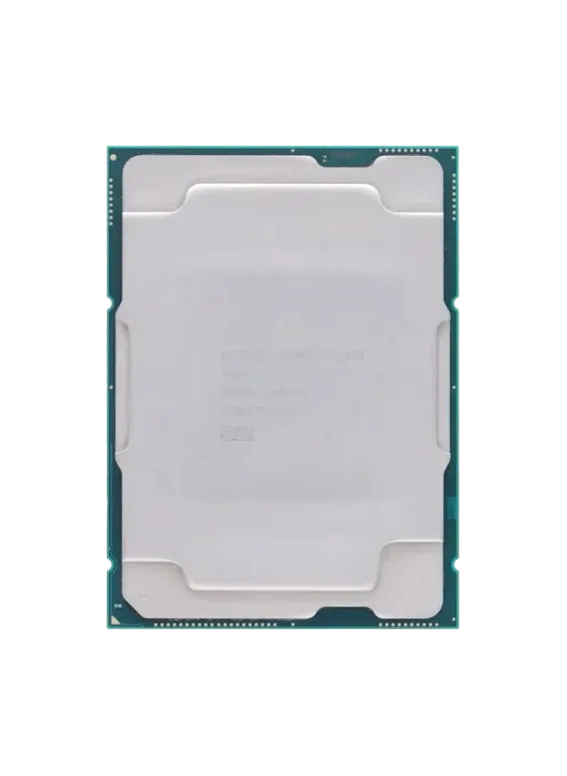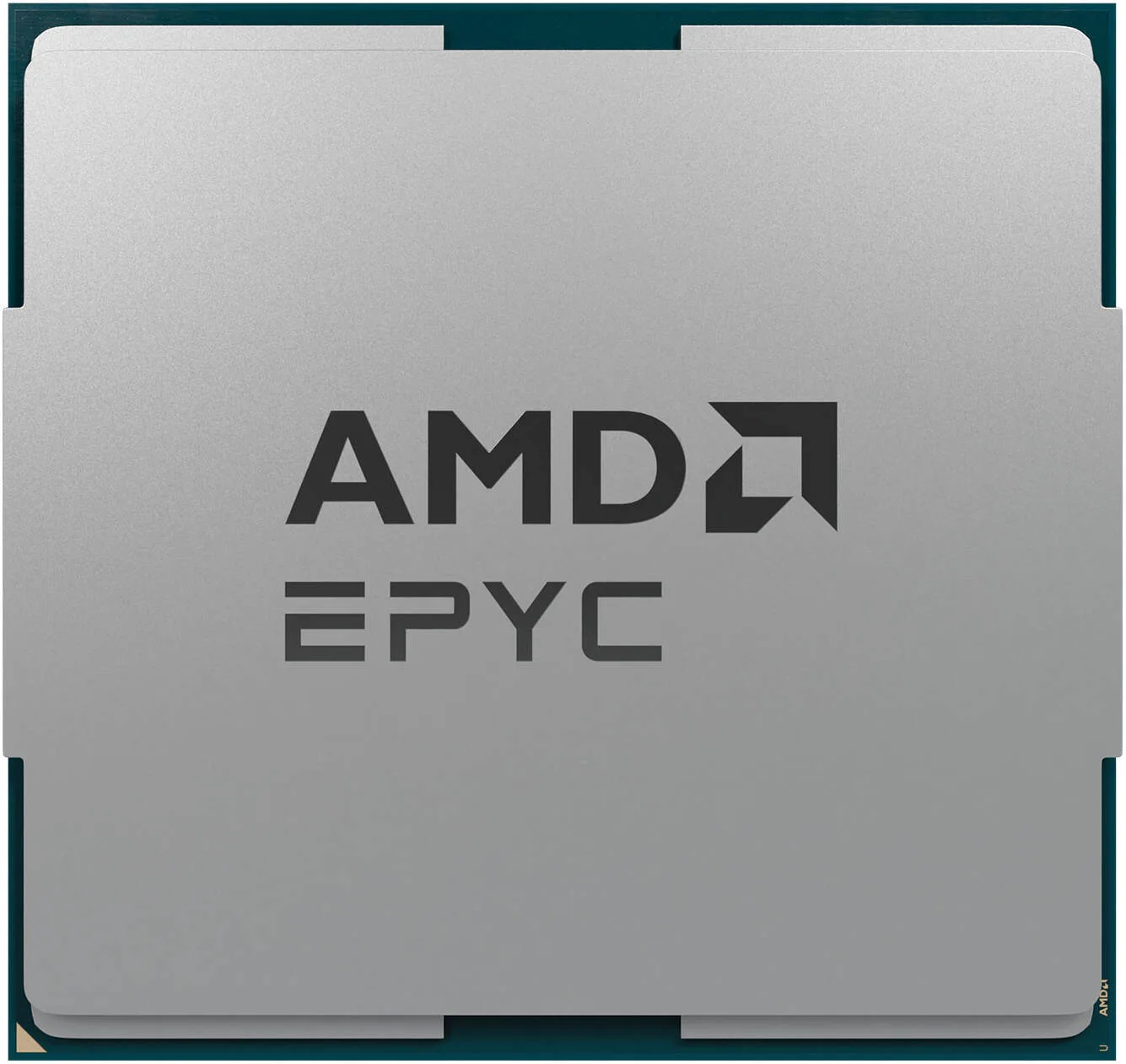
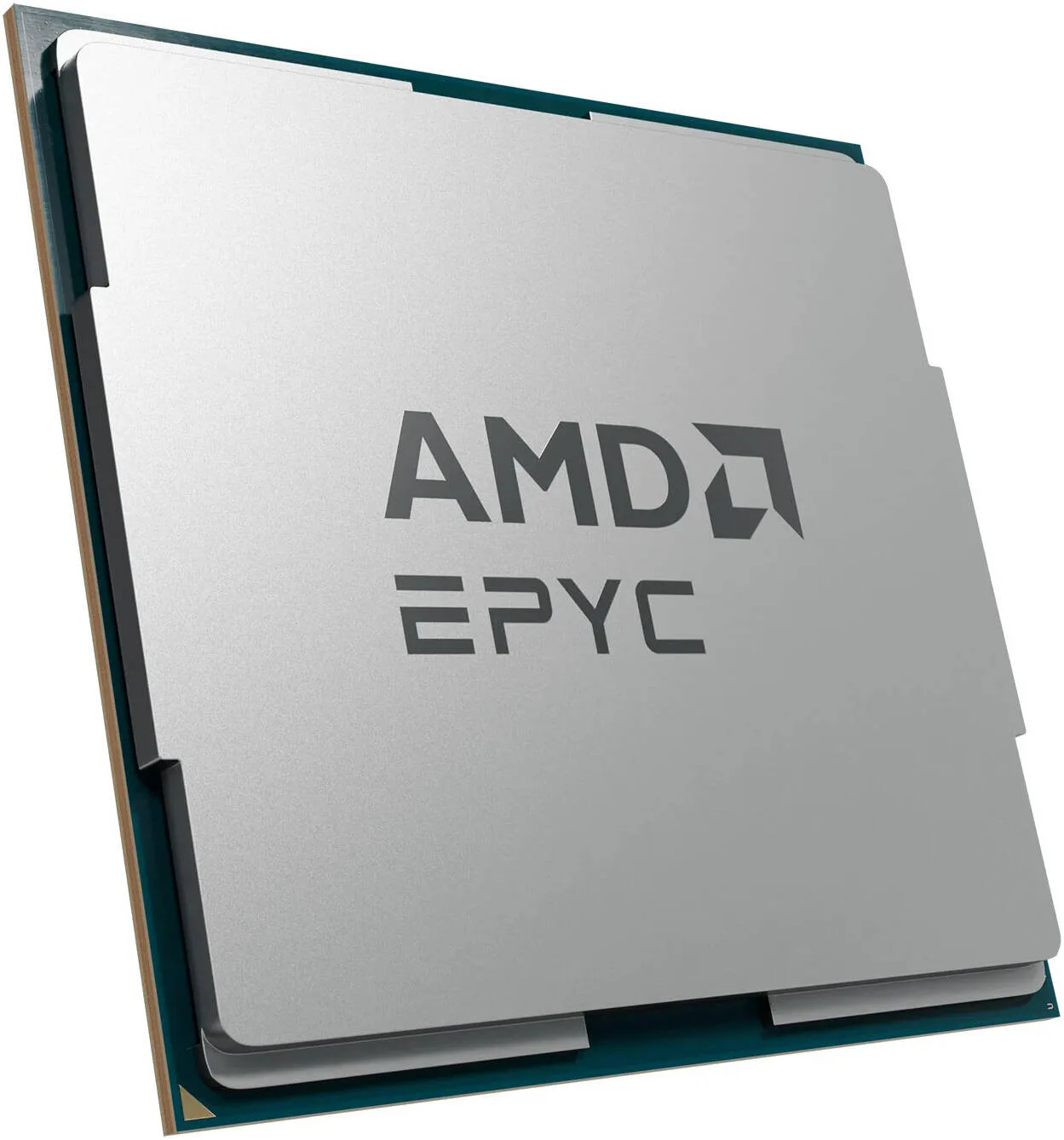
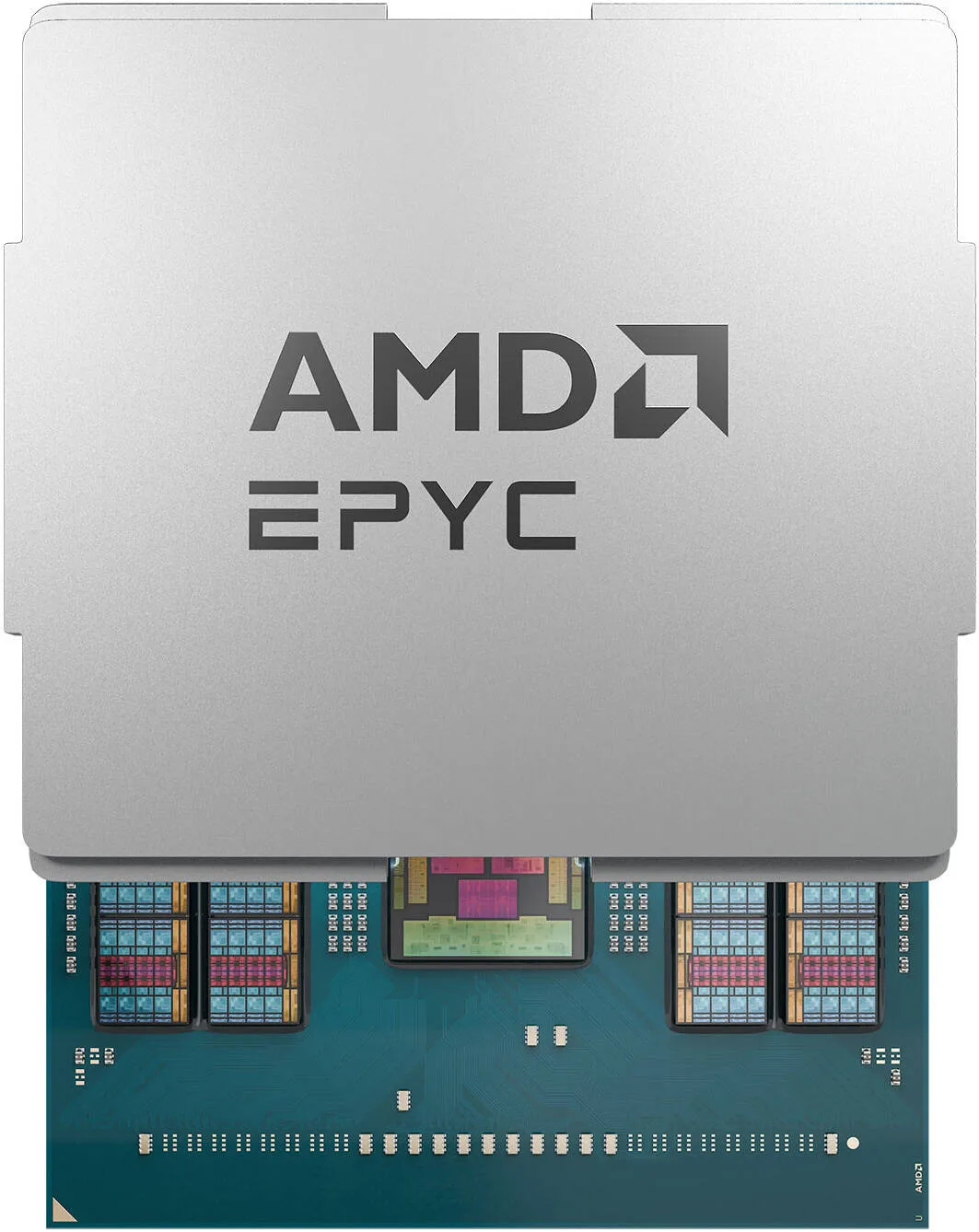
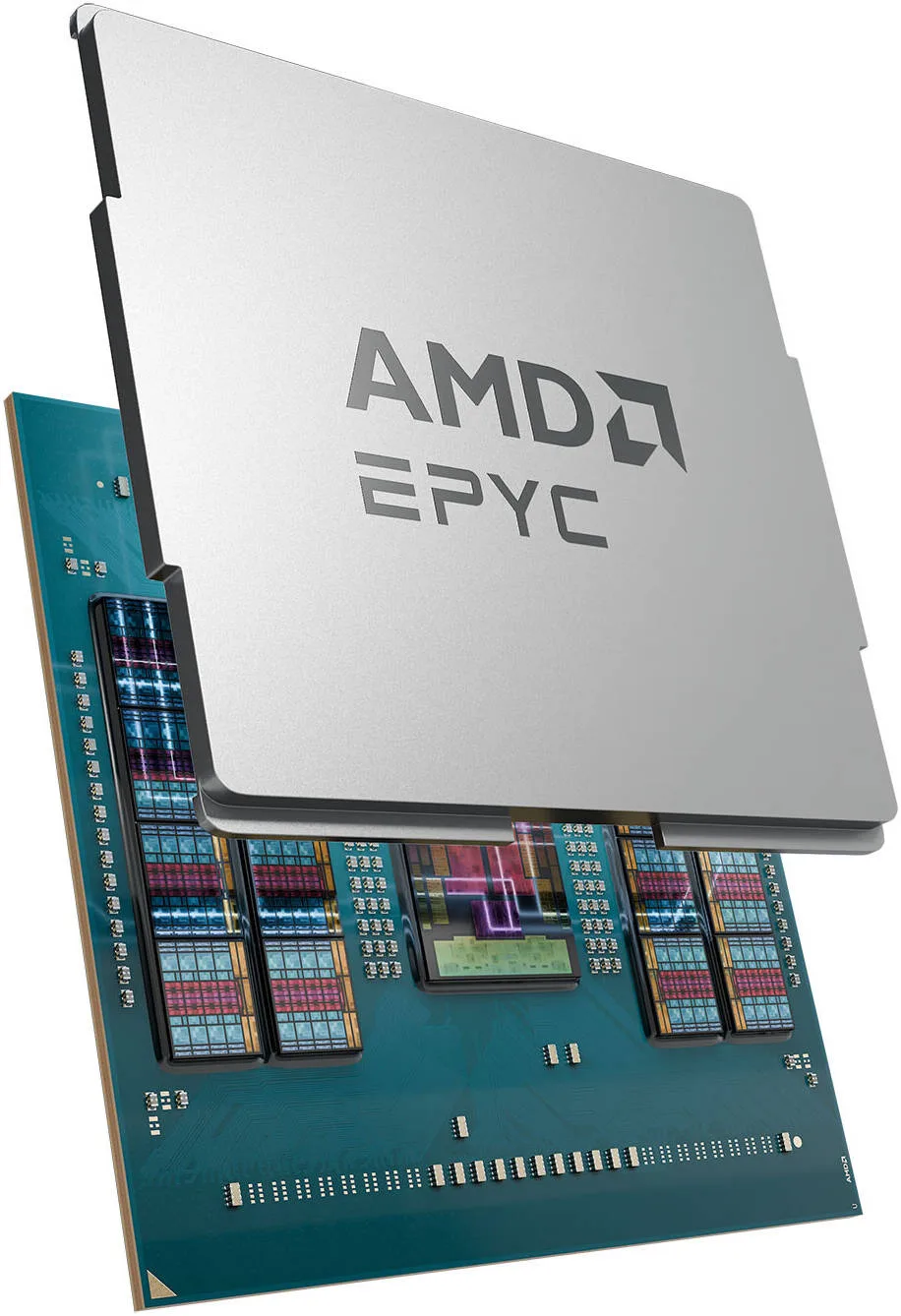
AMD EPYC 9535 Processor, 64-Cores & 128-Threads, 256 MB Cache, SP5 CPU Socket, Up to 4.3 GHz Max Boost Clock, 300W TDP, DDR5 Memory Type, PCIe 5.0 x128

- The Socket SP5 socket allows processor to be placed on the PCB without soldering
- EPYC product line processor for better reliability and ensure maximum productivity
- 256 MB of L3 cache memory provides excellent hit rate in short access time enabling improved system performance
- Tetrahexaconta-core (64 Core) processor core allows multitasking with great reliability and fast processing speed
Warranty: 1 Year — effortless warranty claims with UK-wide coverage. Learn more
Key specifications
- Series
- AMD EPYC
- Cooling device
- Cooling device not included - processor only
- Cpu socket type
- SP5
- Number of cores
- 64-Cores
Details
- Core Family
- 9005 Series
- Number of Threads
- 128
- L2 Cache
- 1 MB (per core)
- L3 Cache
- 256 MB (shared)
- Max Number of PCI Express Lanes
- 128
- TDP
- 300 W
- Manufacturing Technology
- 6 nm
- Virtualization Technology Support
- No
- Hyper Threading Support
- No
- ECC Memory Supported
- No
- Name
- AMD EPYC™ 9535
- Family
- EPYC
- Form Factor
- Servers
- # of CPU Cores
- 64
- # of Threads
- 128
- Max. Boost Clock
- Up to 4.3 GHz
- All Core Boost Speed
- 3.5 GHz
- Base Clock
- 2.4 GHz
- 1kU Pricing
- 8992 USD
- Default TDP
- 300 W
- AMD Configurable TDP (cTDP)
- 240-300W
- CPU Socket
- SP5
- Socket Count
- 1P / 2P
- Launch Date
- 10/10/2024
- PCI Express® Version
- PCIe® 5.0 x128
- System Memory Type
- DDR5
- Memory Channels
- 12
- System Memory Specification
- Up to 6400 MT/s
- Per Socket Memory Bandwidth
- 614 GB/s
- Product ID Tray
- 100-000001147
- Supported Technologies
- AMD Infinity Guard, AMD Infinity Architecture
- Workload Affinity
- Analytics, App dev/test, CAE, ERM/SCM/CRM apps, High capacity data mgmt (NR/RDBMS), VDI, VM Density
4.77 reviews
Got something to share?
Rate this product — your experience helps other buyers.
Freddie D. Used for: Less than a month
Pros
Single socket removed all our NUMA headaches
Cons
SP5 and its cooler are physically enormous
Comment
Commissioned this to replace an ageing dual socket box and the single socket simplicity is the unexpected win. One processor, twelve memory channels, and enough PCIe to hang everything off directly means no NUMA balancing act and no interconnect to reason about. Our workload was always sensitive to that and the improvement is bigger than the core count alone would explain. Early numbers: the nightly ETL run finished in fifty minutes against just over two hours before, and the whole node draws less at the wall than the two older sockets did. One caution for anyone specifying it, the SP5 socket and its cooler are physically enormous, so check your chassis before you commit to anything. A fortnight in service so far, so I will report back, but nothing has wavered yet.
Freya H. Used for: Less than a month
Cons
Management tooling needed a firmware update before it saw the part
Comment
Set this up as a virtualisation host and the first impression is how quiet it is for what it is. Sixty four cores idling draw very little, so the chassis fans stay low until you actually load it. Only note is that our management tooling did not recognise the part properly until we updated the firmware, which took an afternoon we had not planned for.
Isla M. Used for: 3–6 months
Comment
A pair of these run as our database hosts and they have been exemplary. Sixty four cores is the sweet spot for us. Enough to run everything we need per node without pushing us into the per core licence bands that the bigger parts trigger. Query times on our heaviest reporting job dropped by around forty percent against the previous generation, mostly down to the memory bandwidth rather than the cores. They run cool in a standard 2U chassis and we have not had to change anything in the rack. Four months of production load and neither has needed any attention.
Noah M. Used for: 6–12 months
Pros
Eight months of uptime with no unplanned reboots
Cons
You need the full memory complement to see the benefit
Comment
Eight months of uptime, not a single unplanned reboot, and the virtualisation performance has been well ahead of the Xeon boxes sitting next to it in the same rack.
Theo H. Used for: Less than a month
Pros
All core clocks hold up instead of collapsing
Comment
The numbers from testing are already better than the business case assumed. Sixty four cores at a clock speed that does not collapse under an all core load, which was our worry coming from a part that dropped nearly a gigahertz when everything was busy. Compilation of our main image went from twenty six minutes to nine. Memory bandwidth with all channels filled is the other half of that story and it is what makes the difference on our sparse workloads. Very pleased so far!
Isla W. Used for: Less than a month
Pros
The processor itself was the easy part of the build
Cons
Everything else the platform needs is a special order
Comment
The performance is not what I want to comment on, because it is obviously excellent. What I would flag to anyone else specifying one is lead time on everything else. The processor itself was straightforward, but SP5 coolers, the right registered memory and a board that takes all of it are a longer conversation than we expected, and the machine sat half built while we waited. On the hardware alone it would be five stars. Four because the platform around a 64 core part is not a shelf item. It has only been racked ten days, so this is about procurement rather than performance.
Arthur L. Used for: 6–12 months
Pros
Superb throughput when the memory is fully populated
Cons
Deafening in a 1U chassis under sustained load
Comment
Running a small fleet of these now, and they are very good, with two qualifications worth writing down, seven months in. The first is that you only get what you pay for if the memory is specified properly. We ordered our first node with eight DIMMs rather than twelve because of budget, and it left roughly a fifth of the achievable throughput on the table. The second batch went out fully populated and the difference in our benchmarks was immediate. The second is thermal. In a 1U chassis under sustained load the fans are loud enough that nobody wants to stand near the rack, and we ended up moving them to 2U for that reason alone. Not a fault of the processor exactly, but worth planning for. Four stars, and the fifth is waiting for the platform around it to catch up.