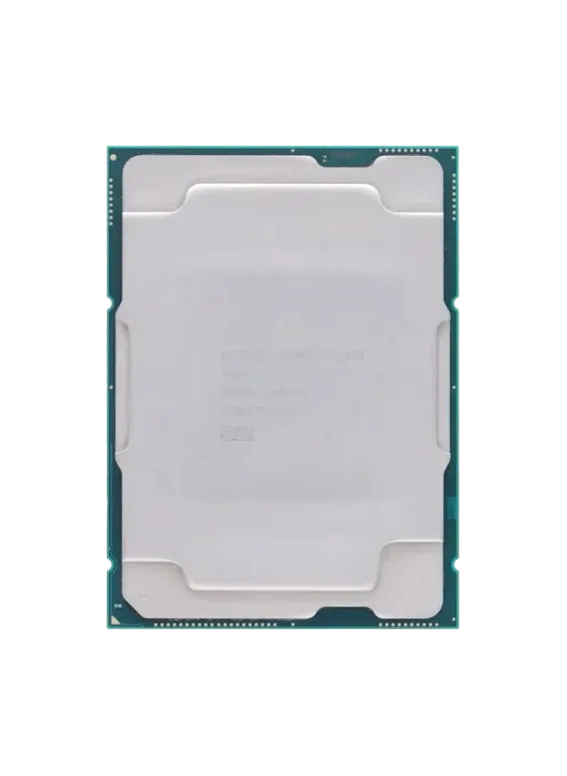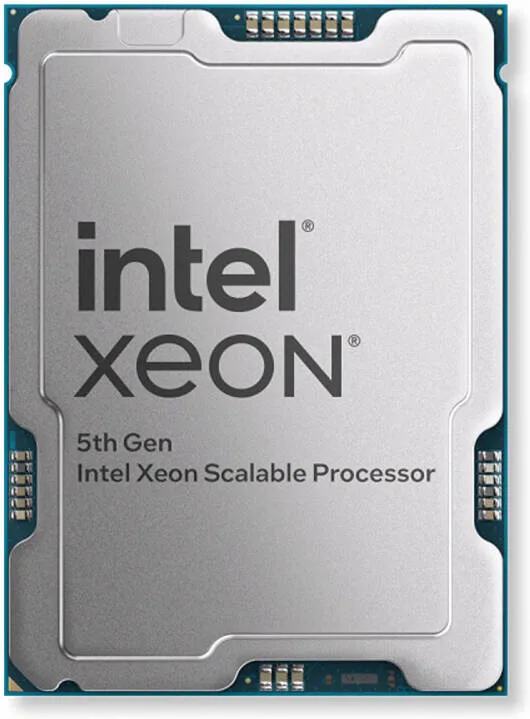
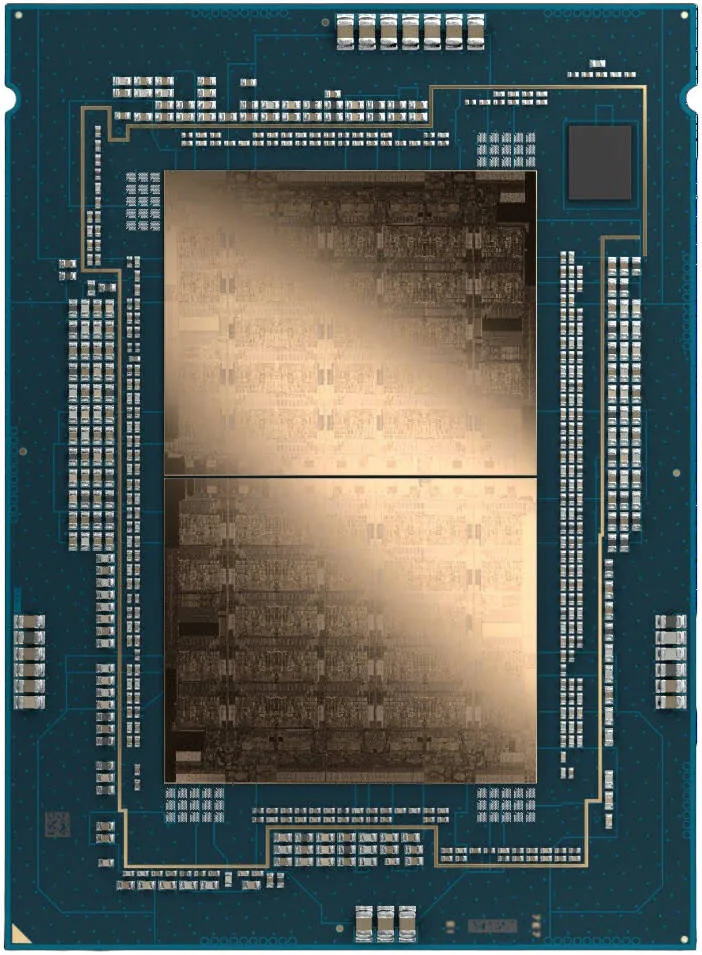
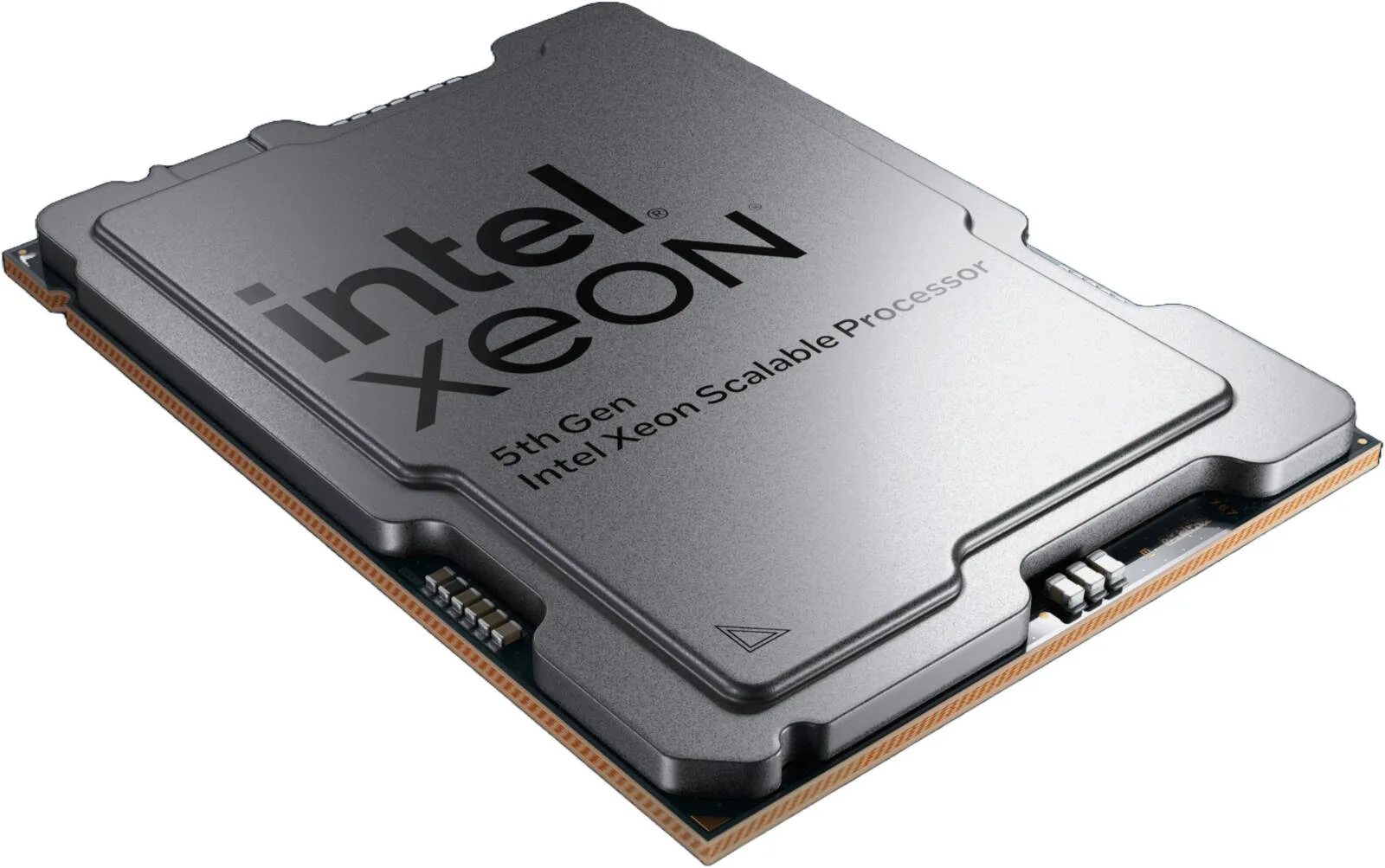
Intel Xeon Platinum 5th Gen 8580 2 0 GHz Processor, 60 Cores 120 Threads, Socket 4677 Up to 4 0 GHz Max Turbo Speed, 300 MB Cache, 8CH DDR5 - 5600 with 4TB Max Memory PK8072205512000S RN57

- High Core Count (60 Cores): Delivers exceptional performance for demanding workloads like virtualization, high-performance computing, and large databases.
- Large L3 Cache (300 MB): Reduces latency and improves data access for faster application execution.
- Advanced DDR5-5600 Memory Support: Enables exceptional bandwidth for smoother data transfer and improved system responsiveness.
Warranty: 1 Year — effortless warranty claims with UK-wide coverage. Learn more
Key specifications
- Series
- Intel Xeon
- Cooling device
- Cooling device not included - processor only
- Cpu socket type
- FCLGA4677
- Number of cores
- 60-Cores
Details
- Core Family
- Platinum
- Number of Threads
- 120
- L2 Cache
- 2 MB
- L3 Cache
- 300 MB
- Max Number of PCI Express Lanes
- 80
- TDP
- 350 W
- Manufacturing Technology
- 10 nm
- Virtualization Technology Support
- Yes
- Hyper Threading Support
- No
- Maximum Supported Memory
- 4 TB
- ECC Memory Supported
- Yes
4.811 reviews
Got something to share?
Rate this product — your experience helps other buyers.
Jack W. Used for: Less than a month
Pros
AMX makes a real difference on inference
Cons
Documentation for the accelerators is thin
Comment
The AMX acceleration is already earning its keep on our inference workload
Freddie S. Used for: Less than a month
Comment
Commissioned a pair of these into an existing FCLGA4677 estate, which was half the reason we chose them, since everything from the chassis to the cooling already fitted. Sixty cores per socket with eight memory channels has landed roughly where we modelled it, and the virtual machine density per node is up by about half against the boxes they replace. Nothing exotic in the deployment, no surprises in the firmware, and the management tooling recognised them without an update, which is more than I can say for the last refresh. Twelve days of live traffic so far and nothing has needed touching.
Leo M. Used for: Less than a month
Pros
Threefold gain on inference once AMX is actually in the path
Cons
Getting the accelerators used took a fortnight of library work
Comment
Two nodes deployed so far and my early view is that the accelerators are the whole story here. On ordinary integer work the sixty cores are respectable rather than remarkable, and per core the AMD parts we run alongside are ahead. Where this pulls away is anything that touches AMX or the built in compression, and for our inference workload that is a threefold difference, not a marginal one. Four stars for now because getting the accelerator paths actually used took a solid stretch of library and kernel work that nobody warned us about. Worth it, but not turnkey. Three weeks of production behind us, so treat this as a first impression rather than a verdict.
Amelia W. Used for: More than a year
Pros
Not a single unplanned outage in over a year
Comment
Hard use throughout and not one unplanned outage yet
Sophie S. Used for: More than a year
Cons
Sixty cores in a 1U demands airflow you have to design for
Comment
Fifteen months of continuous production load and these have simply run. No unexplained resets, no memory errors that were not the DIMMs' own fault, and the RAS features have caught two failing modules before they took an application down with them. The only thing I would warn about is heat density, sixty cores in a 1U needs airflow you have to design for rather than assume.
Millie M. Used for: Less than a month
Pros
Commissioning was completely undramatic
Cons
Memory training on the first boot takes a few minutes
Comment
The deployment went about as smoothly as one of these ever does. Our estate is already on this socket so the chassis, the cooling and the spares all carried over, which is worth a great deal when you are refreshing rather than building fresh. Firmware came up clean, all sixty cores present, memory training took a few minutes on first boot and has been instant since. Too early for a verdict on long term behaviour, but everything about the commissioning said this is a mature platform.
Ava M. Used for: 1–3 months
Comment
Running our analytics tier on these, the memory subsystem is what has impressed most. Eight channels of DDR5 per socket, and with all of them populated the bandwidth is enough that our largest joins stopped being disk bound and started being compute bound, which is a much nicer problem to have. Query times across the board are down by roughly a third. Six weeks of this and the cores themselves are fine, though I would not pretend sixty is a lot any more given what the competition ship. What you buy here is the platform: the ecosystem, the firmware quality and the tooling that already understands it.
Daisy F. Used for: More than a year
Pros
Utterly reliable in production
Cons
Beaten on cores per pound by the competition
Comment
Reliable in every respect, but per core we get more from the AMD boxes in the same rack.
Maya B. Used for: 1–3 months
Cons
Sustained all core clocks sit well below the headline figure
Comment
The RAS and memory features are why we keep buying Xeon rather than chasing core counts elsewhere. Predictable failure handling matters more to us than a benchmark score, and this generation has been faultless so far. Worth saying that the sustained all core clock is lower than the headline figure suggests, so size your capacity on the all core number, not the boost. Two months of production on the first pair and that has held exactly true.
Ava A. Used for: 6–12 months
Pros
Dependable, which is all we ask
Cons
The socket needs a very specific cooler
Comment
Sixty cores of absolutely dependable server silicon. Not one incident to report
Noah P. Used for: 3–6 months
Cons
You pay handsomely for the badge
Comment
Does what a Xeon should. Costs what a Xeon costs, sadly